Three and a half years after it was founded, Israeli AI cyber defense unicorn Dream Security has more than doubled its value to $3 billion, after raising $260 million in its latest private funding round announced on Thursday.
To date, the company has secured a total of $412 million from investors to build AI infrastructure geared to help governments and critical national infrastructure sites — like oil, water, and energy facilities — secure and protect their most sensitive data from sophisticated cyber attacks by bad actors, including Russia, Iran, North Korea, and China. Dream last raised capital in a secondary offering at a valuation of $1.3 billion in August last year, following a $100 million investment last February at $1.1 billion.
“We started three and a half years ago with the vision that the next cyber warfare is going to be AI versus AI and not human versus human anymore,” Dream Security CEO Shalev Hulio told The Times of Israel. “A year ago, we realized that the bad guys of the world — the Chinese, the Russians, North Koreans, the Iranians — are abusing AI to find the weakest link in every country or in every critical asset in order to penetrate it.”
“We believe that the next supernations are going to be countries that know how to secure their national data and leverage cyber, AI and quantum [computing],” Hulio said.
Dream Security was founded in January 2023 by Hulio, months after he stepped down as CEO of embattled cyber espionage firm NSO Group, which he co-founded; former chancellor of Austria Sebastian Kurz; and Gil Dolev, founder and former CEO of Wayout Group, an intelligence-gathering company focused on IoT (Internet of Things) devices.
Based in Tel Aviv and with offices in Vienna and Abu Dhabi, the startup said it has built an AI-native national cyber defense platform to defend against nation-state cyber threats; an autonomous AI security researcher that discovers vulnerabilities and helps governments identify weaknesses before attackers do; and a sovereign AI platform to help governments process and analyze fragmented national data using internally developed AI models.
The new investment was co-led by Miami-based growth equity firm Bicycle Capital and Group 11, founded by Israeli-American venture capitalist Dovi Frances. Other participants in the funding round included US private equity firm Bain Capital Ventures; Singapore-based venture capital firm Antler; and New York-based private equity investment firm Tru Arrow Partners, alongside global investors.
Hulio said that the capital injection will be used for future acquisitions, talent recruitment, and footprint expansion to the US and further into Europe.
Dream said sales have more than doubled over the past two years to $300 million, amid growing demand for its software platforms by Western-allied governments and national cybersecurity organizations across Europe, the Middle East, and Southeast Asia. The cyber unicorn employs 350 workers, of whom 300 are based in Israel.
“There is a new geopolitical landscape in a world that has become more insecure and in which there is a lack of trust towards big players like the US or China,” said Kurz. “Hybrid warfare has become more and more of a reality, and while there are countries like Israel that are used to real wars, there are plenty of countries in the world that are not, but they are affected by hybrid warfare, like cyberattacks, every day.”
“Nations that want to control their future need the ability to operate advanced AI under their own authority, on infrastructure they govern, and in alignment with their own interests,” said Kurz.
Hulio said the latest action by the US government invoking an order to cut access to powerful Mythos AI models for foreign nationals over national security concerns is a sign of the times, showing governments need a sovereign national language model to avoid dependence on companies such as Anthropic and OpenAI.

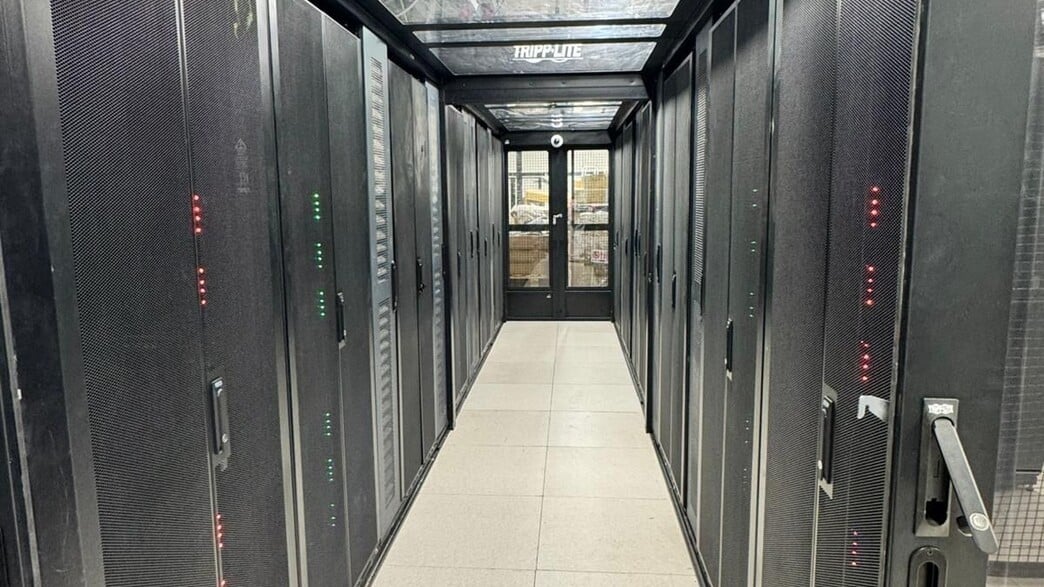
Dream has been developing sovereign natural language models designed for government use for areas such as cybersecurity, intelligence, healthcare, and finance. To power these models without relying on public cloud software, the firm established its own secure, sovereign data center near Modiin earlier this year to train proprietary language models and domain‑specific AI systems.
“Governments have huge amounts of data and they want to use AI but they can’t take their entire data and upload it to ChatGPT or upload it to Claude or Gemini because it’s sensitive information,” said Hulio. “Governments can’t rely on foreign nations, or foreign companies to deal with their data, or depend on technology they don’t control.”
“They need to own their data, own their AI, and we provide them with AI language models that are built in Israel from scratch,” he added.
Hulio emphasized that the firm does not have access to government information on which the models are trained at their data center.
“Nobody has access to it, nobody can use it besides the government, and the most important thing, nobody can shut it down,” he said.
Asked about the road ahead, Hulio said Dream is pivoting toward developing a software platform to allow governments to securely combine and deploy cyber, AI, and quantum technologies.


Click Here For The Original Source