
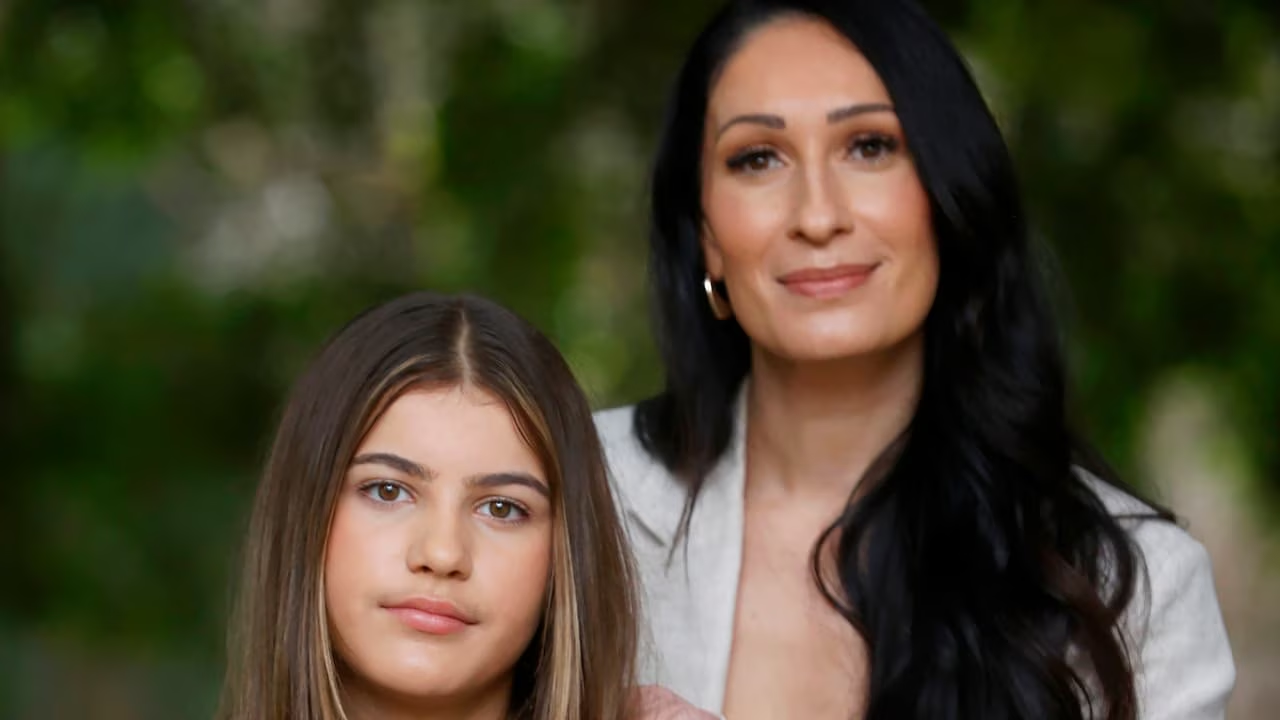
Australia must significantly beef-up fines for social media companies breaching the nation’s world-leading age restrictions, experts say, and “hit them where it hurts” – their bottom line.Adolescent psychologist Dr Michael Carr-Gregg, one of Australia’s most prominent experts on teen behaviour, said Australia would never see companies comply unless Communications Minister Anika Wells further increases penalties under the social media minimum age legislation.He said the government should follow Canada’s lead, where it is proposed tech giants be fined up to three per cent of their global revenue, which in Meta’s case could be north of $US 6 billion, or for TikTok upwards of $273 million.In Australia, the maximum applicable penalty for a breach of the legislation is $109.2 million. It has not been tested in court, with the eSafety Commissioner yet to apply for fines amid five open investigations.“The only reason why people started wearing seatbelts was when the fines started coming in, and this is what I think is the missing piece here in Australia – we haven’t actually fined the platforms,” Dr Carr-Gregg said in the latest episode of Unpacked: Beyond Social Media.“I think we were right to put the onus on them, but until we start hitting them where it hurts, like the Canadian legislation, which was talking about fining them three per cent of their global income, that’s got teeth. That’s where we need to go next.”Watch Episode 3 of our new series Unpacked: Beyond Social Media above. For more on our new series go to www.beyondsocialmedia.com.auOther jurisdictions including Ireland, the United Kingdom and the European Union also make provisions for fining Big Tech a percentage of revenue, under their existing online safety acts, none of which prohibit under 16s from holding accounts with the platforms.It comes after US courts ordered Meta – owner of Facebook, Instagram and WhatsApp – to stump up tens of billions of dollars for deceiving users over data privacy, just weeks after the tech giant also agreed to one of the world’s largest settlements over harm to children.Wayne Holdsworth, whose teenage son Mac took his own life at just 17 years old after being caught up in a sexual extortion scam on social media, “wholeheartedly” endorsed Dr Carr-Gregg’s call to emulate the Canadian proposal.“We need to hit the tech companies where it hurts most – the share price,” he said.“It’s a great idea that again places pressure on the tech companies to simply be responsible. “We are not asking for miracles – simply asking for the provision of safe services for Australians.”In her 2024 review of Australia’s Online Safety Act, former ACCC deputy chair Delia Rickard concluded the existing penalties under that legislation – which maxed out at $782,500 – “would barely be considered a ‘parking ticket’” to Big Tech, “and potentially even far less of a deterrent than one”.Prior to the under-16s ban, the Rickard review recommended civil penalties be increased to $50 million or five per cent of global annual turnover – whichever is greater of the two.“Maximum penalties should be strong in proportion to the size of a service in order to be credible and effective,” Ms Rickard wrote.“This is why the approach taken in the United Kingdom and Europe, and proposed in Canada, where maximum penalties for online services are primarily framed as a percentage of that service’s global annual turnover, is one that should be employed in the Act in relation to duty of care breaches.”Teenager Flossie Brodribb, from Hobart, asked her mum Romany for permission to sign up for Snapchat, TikTok and Instagram, after feeling “left out” among her friends at 11 years old. In return, Mrs Brodribb told her daughter if she could find a single piece of proper research supporting social media for adolescent brain development, she’d consider it. Flossie couldn’t, and instead the scientific evidence turned her off social media for life.“Considering we’re the first generation of children who grew up with these powerful algorithms, we shouldn’t have to be the guinea pigs that suffer until the adults decide to do something about it,” she said.Now aged 13, Flossie might just be the nation’s youngest proponent of the government’s crackdown on big tech, and a fierce advocate for the social media minimum age laws that have seen her and her peers banned from the platforms for almost a year.Both mum and daughter have described the international reaction to Australia’s approach, sparked by this masthead’s Let Them Be Kids campaign, as “heartening”.“I’m very happy that there’s been a global conversation; even if other countries aren’t (taking action), it’s still a massive win to know they’re talking about how social media can access kids,” Flossie said, and urged Aussies to avoid judging the effectiveness of the laws too soon.“It can’t be measured in months or even years, it has to be measured in decades.”The pair have each have thrown their support behind Dr Michael Carr-Gregg’s calls to boost penalties under the minimum age legislation to echo Canada’s proposal.“I think that that’s a great idea, with the penalty being a percentage instead of a dedicated amount,” Flossie said.“Let’s say the fine is $10 million – TikTok, Instagram, they could pay that easily, but the penalty needs to be proportionate to the size of the company, otherwise it’s just loose change to big tech.”Mrs Brodribb agreed, urging Australian regulators to show the legislation is no empty threat.“Let’s be frank about this – big tech has had its grace period. Now it’s time to demonstrate that those laws have teeth,” she said.“Australia needs to stand up and say, our children’s wellbeing should never come second to big tech’s bottom line.”If this story has raised concerns for you or someone you know, help is available. Call Lifeline on 13 11 14 or Kids Helpline on 1800 55 1800.
Source link
——————————————————–
Click Here For The Original Source.
