As North Korean cyberthieves were funneling billions out of Binance last month, the world’s largest crypto exchange looked to two other companies to help stop the bleeding: Tether and Circle.
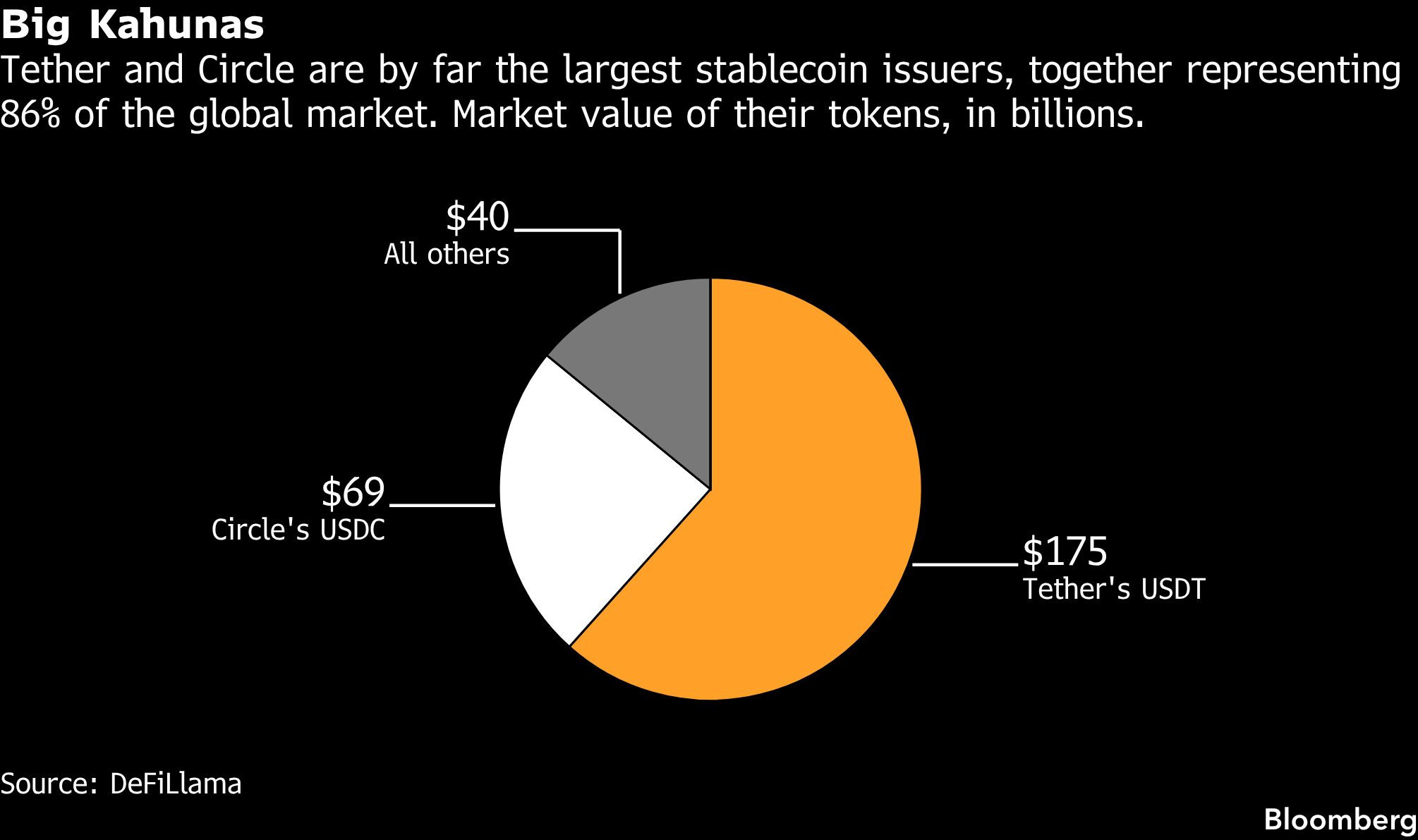
The duo, which issue cryptocurrencies that mimic the US dollar, reacted unusually quickly to freeze accounts hackers were using to move their haul around. It was a sign of the seriousness of the hack, the industry’s maturation, and the most public showcasing yet of the near-total control Tether and Circle exert over the tokens they created. They dominate the market, with their two main stablecoins together representing 86% of all in circulation.
As the $6.3 billion Binance hack was unfolding, Tether froze more than $1.5 billion of its USDT coin in 30 minutes, while Circle froze $1.1 billion of its USDC. Their swift actions – prompted by requests from Binance as well as the US government — became a tourniquet for what would otherwise have been a much more severe and expensive heist.
Until now, Tether and Circle have largely had different approaches to freezing, which essentially means blocking movement to and from specific addresses on blockchain networks that shift crypto around.
Tether has been criticized for not having a consistent modus operandi, sometimes allowing tokens to slide away unimpeded and other times seizing them indefinitely. It sometimes charges a fee to eventually return them, according to customers who described their experiences. Meanwhile, Circle’s philosophy until recently had been to only act after receiving a court order, a method so structured and time-consuming that the judge’s decision could be irrelevant by the time it came.
But during the Binance cybertheft, both companies acted almost immediately — in a fashion Circle referred to as “machine speed.” Luckily for Binance, which owns a stake in Circle, the company took a different tack than in some prior hacking episodes. Back in May, it also changed a policy stated on its website to only require a legal order from a government authority rather than from a court.
A spokesperson said this language change reflected “longstanding practice.”
Binance also temporarily halted withdrawals and fully restored stolen assets to customers’ accounts at its own expense, marking a relative success for crypto investors who might otherwise be suffering losses or left in limbo. Yet the speed of the Binance response stands in contrast to the experience of victims of earlier hacks, some of whom have spent years trying to recover frozen funds.
Money on Ice
Take Bittok Technology Pte. Ltd., a small Singaporean crypto exchange that lost $50 million to hackers in June 2020. Tether decided to freeze some of the assets. But after more than five years, none of Bittok’s USDT had been returned after a circuitous path through attorney wrangling.
Along the way, a lawyer representing Tether advised the entity that acquired Bittok about a 20% “reissuance fee” on whatever was returned, according to emails reviewed by Bloomberg News. It’s not the only time Tether has done so: in several instances, victims only received their stolen USDT in chunks over time, with the same kind of fee, according to people involved who did not want to be identified because the negotiations were private.
Others have been even less lucky.
Berlin-based Valentyn Golyshenko pleaded for help online for months from Tether, regulators and politicians after getting caught in a $75,000 scam, according to his social-media posts. In his telling, requests to freeze funds were rejected, and ultimately the wallet holding his pilfered crypto was drained to zero. Tether Chief Executive Officer Paolo Ardoino appears to have blocked him, and Golyshenko recently made his X account private.
In Circle’s case, the company has mostly been accused of being too prescriptive.
When hackers drained $285 million from an entity called Drift Protocol in April, much of the stolen funds were converted into USDC. Rather than freezing anything immediately, Circle opted to wait, with executives citing its court-order policy. There are more than a dozen similar examples of Circle opting against freezes over the past few years, according to researchers.
Obtaining such an order is “very, very difficult and very, very complicated,” said Ollie Smith, a former policeman and now a senior investigator at zeroShadow, a crypto tracing firm. “They’re not going to get these court orders in 35 minutes.”
Meeting Demands
Binance’s $6.3 billion hack was unprecedented in size, scope and sophistication. It was the biggest cybertheft not just in crypto’s past but in history altogether. The US government and industry analysts have blamed North Korea. Binance has provided details of how the crooks went about getting into its systems over a period of months, including through fake job interview offers.
Tether views its approach to such schemes as a best effort to manage the demands of law enforcement as well as its own liabilities, Ardoino said in a recent interview.
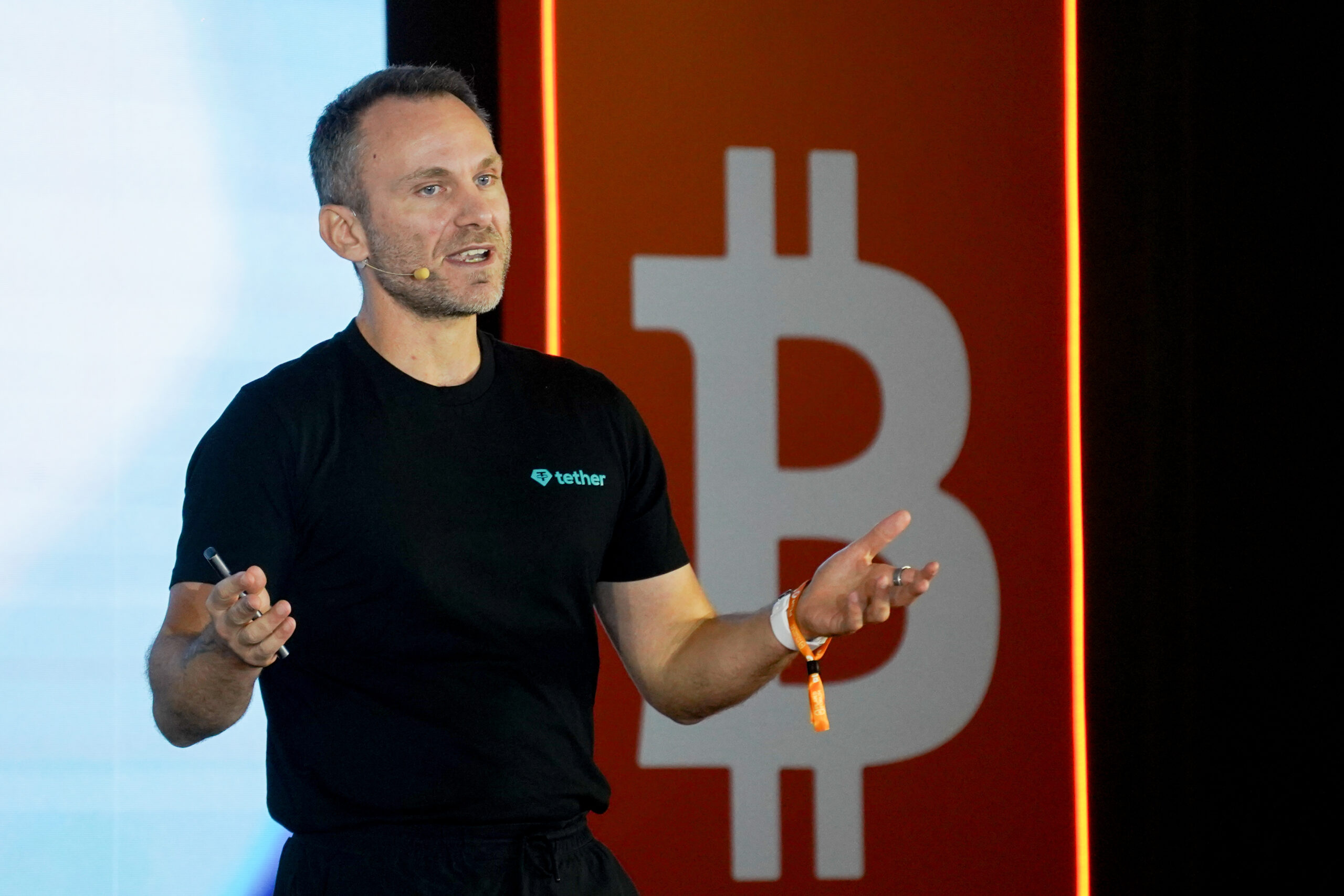
Tether CEO Paolo Ardoino/Bloomberg
“When it comes to civil cases, we reissue in steps and we need to manage our own risk in a sense that there could be other claimants,” he said. “The problem is there is no guidance, there is no law that guides this.”
The company is now working with many of the crypto industry’s biggest exchanges to create direct emergency lines for situations like the Binance hack, a spokesperson said. Tether has reissued $1.2 billion in USDT to date and the fees it charges help fund that process as well as legal costs, he added.
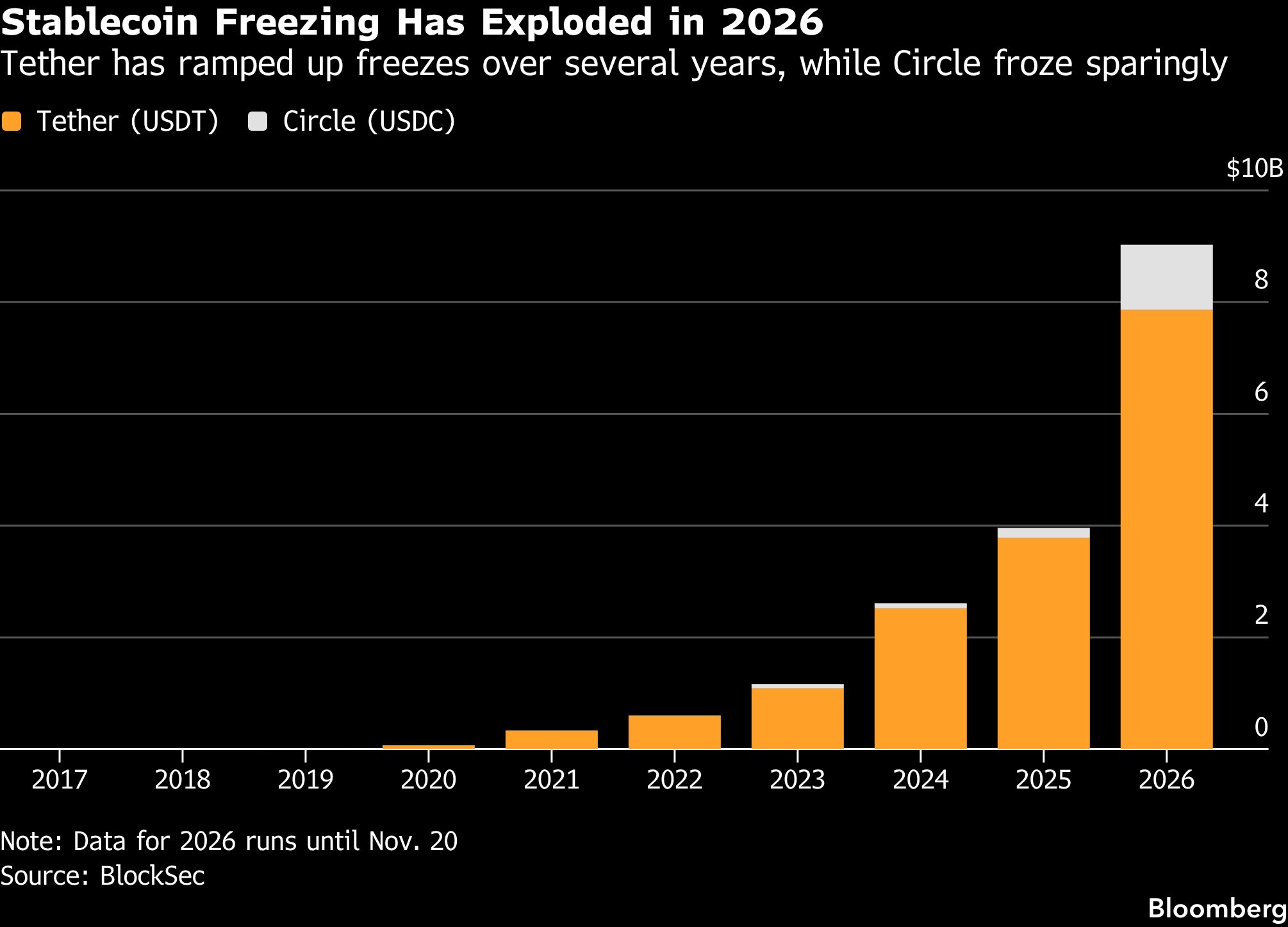
The company has touted its efforts to halt illicit activity, especially during US President Donald Trump’s second term. It boasted about having frozen more than $7 billion in assets to date in a press release about the Binance hack, while the US Justice Department has thanked Tether for its coordination on efforts to halt money-laundering or payments to sanctioned countries including Iran.
In total, Tether now interacts with 73 countries and more than 170 agencies on efforts to stop illegal use of stablecoins, the spokesperson said. It has also supported training for law enforcement agents to investigate crypto crime across four continents, he said.
At the same time, Tether has faced mounting legal difficulty across borders as it pursues USDT freezes. In just the past few months, it’s been sued by Thai businessmen and payments firm Conduit Technology Inc. over separate freezing incidents, while it’s also involved in court proceedings over the Iran-linked assets.
Five years ago, Tether was in a very different place. In 2021 alone it was fined roughly $60 million by state and federal authorities for allegedly bluffing about USDT’s reserves, which Tether uses to keep the token’s price aligned with the dollar. Tether did not admit to any wrongdoing.
Back then, Tether rarely blacklisted funds at scale, nor did it try to draw attention to freezes. But during this Trump administration, the company has made a concerted effort to align itself more closely with US policies. Those include a 2025 regulation about stablecoins that’s helped boost Tether’s business, as well as rhetoric about dollar-backed tokens supporting the greenback’s supremacy in global currency markets.
Stablecoin freezing is more common now because large-scale hacks and illicit fund movement have become prevalent in that slice of the crypto market, said Ari Redbord, global head of policy at blockchain-security firm TRM Labs. In his view, the trends will continue, but the real question is not whether Tether and Circle have the ability to freeze funds in real-time, but whether customers are ever reimbursed.
“The really important piece of the puzzle is the reissuing, because that’s how victims get their funds back,” Redbord said.
‘Rule-of-Law’
Whereas El Salvador-based Tether is a wildly profitable, privately held rebel of sorts, investing in a range of assets from gold to private securities, Circle is a publicly traded, New York-based company designed from the outset with compliance in mind. Its CEO, Jeremy Allaire, is known to do things by the book, trying to avoid trouble.
“We’re a rule-of-law company,” Allaire said in a recent interview. He explained how Circle’s demeanor has changed as it responds to the nature of more sophisticated hacks, as well as law-enforcement requests.
“The threat environment has been evolving very rapidly, even just over the past three months,” he said. “Circle itself, the industry more broadly and law enforcement, all together, are operating on faster rhythms right now.”
Yet for people like Joshua McCollum, the lead plaintiff in a class-action lawsuit against Circle over its handling of the Drift hack, all of this is cold comfort.
McCollum lost about $23,500 in the April 1 exploit, and is one of more than 100 victims seeking restitution, according to the lawsuit. It describes how prominent members of the crypto community warned Circle on social media that there appeared to be a rip-off in progress, as tokens kept draining away. Afterward, the company cited its policy about court orders, with Allaire saying it would be a “moral quandary” to act otherwise.
“Circle’s early intervention in last month’s Binance hack underscores that it has always had the power to respond quickly to avert massive losses by its users and investors,” McCollum’s attorneys at the law firm Gibbs Mura said in a written statement. “Unfortunately, for the victims of the Drift exploit, it is too little, too late.”
Circle has asked the judge to dismiss the case. The company does not comment on pending litigation, its spokesperson said.
Same Headaches
While every case is different, the headaches of retrieving stablecoins from Tether or Circle are much the same.
Tether complies with freezing orders “without thinking twice,” said Sathya Narayanan Subramanian, an advocate based in India at VSM Legal Associates who’s worked with USDT holders in Russia, Germany and Spain. None of them have had funds successfully reissued.
Tether has “nothing to lose, to be very frank,” Subramanian said. “At the end of the day they have control of the assets.”
He is among several victims and representatives who described difficulties in recovering frozen funds.
The US political winds are also changing, which might affect the outcome for anyone still waiting for a stablecoin de-icing.
Although Trump is still in charge of the White House, Democrats have captured both houses of the US Congress, which is not a great sign for the crypto industry, according to policy experts. What it means for victims who had their digital money stolen is anyone’s guess.
In particular, they point to a report in September by the US Senate’s Permanent Subcommittee on Investigations that partly blamed Tether for Iran’s alleged use of USDT to evade sanctions and finance regional proxies including Hezbollah.
Tether is doing “nowhere near enough” to stop criminals who use its tokens, according to Senator Richard Blumenthal, a Democrat representing Connecticut who authored the report. He has been one of a few prominent voices in Congress advocating for better consumer-protection in crypto for some time.
“Tether is one entity that deserves very serious and penetrating scrutiny and investigation,” he said in an interview.
Ardoino dismissed Blumenthal’s comments as a political attack without substance. Yet he and Allaire both seem to recognize that the Binance hack was a moment for their companies to prove themselves to customers and governments alike.
“Illicit actors will always try to find new ways and we are going always to find new ways to catch them,” Tether’s Ardoino said in the interview. “And it’s almost like suggesting that, ‘oh, there are robberies.’ Yes, there are robberies, but there will be always robberies and you always get better to find the thieves. And that is exactly what we’re doing.”
Photo: Photographer: Gabby Jones/Bloomberg
Copyright 2026 Bloomberg.
Topics
Cyber
Click Here For The Original Source.
——————————————————–