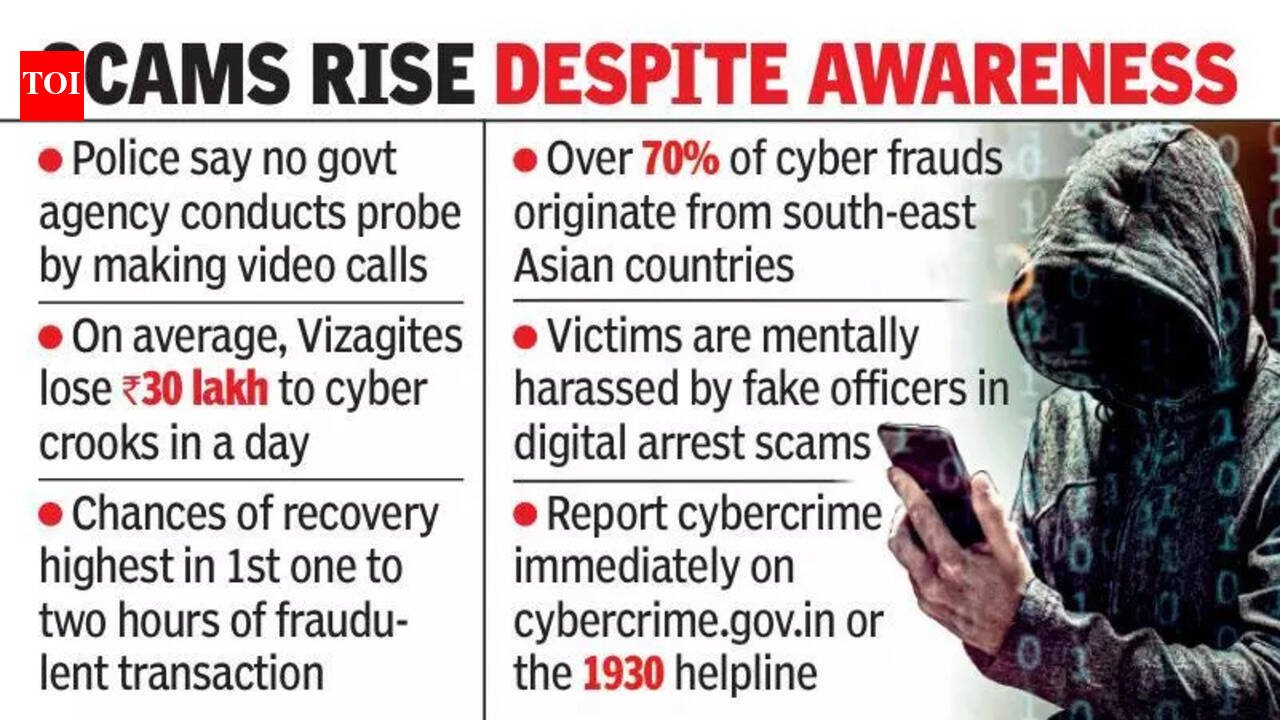
Visakhapatnam: Cyber criminals impersonating officials of the Anti-Terrorist Squad (ATS) duped more than seven persons, including a chief general manager of a govt organisation, of over ₹55 lakh in a “digital arrest” scam in the second week of March. Despite repeated police advisories, viral social media warnings, and extensive media coverage, such frauds continue to surface in Andhra Pradesh.The Vizag-based general manager alone lost ₹30 lakh after fraudsters claimed he was linked to a money-laundering case tied to terrorism. The 58-year-old victim received a WhatsApp call from unknown persons posing as ATS officials, followed by a video call allegedly from a Delhi police station. The callers accused him of criminal involvement, demanded Aadhaar and personal details, and threatened arrest under anti-terror laws if he failed to cooperate.Exploiting fear, the fraudsters instructed him to isolate himself in a locked room, coerced him into sharing bank details, and demanded ₹30 lakh for a “confidential investigation” to prove his innocence. Terrified, he transferred the amount before realising it was a scam. When the calls stopped, he approached Vizag cybercrime police and lodged a complaint.Six more victims in Vizag city reportedly transferred ₹25 lakh under similar threats. Police said digital arrest scams typically involve impersonation of police, CBI, NCB, Supreme Court officials, or telecom authorities. Victims are accused of links to criminal activity and placed under a fake “digital arrest” via video calls, where they are isolated, intimidated, and coerced into transferring money.Officials note that despite awareness campaigns, fear and technological manipulation continue to drive victims into financial losses. The scams exploit psychological pressure, convincing targets that immediate payment is the only way to avoid arrest.Cybercrime police have urged the public to remain vigilant, avoid sharing personal or financial details over unsolicited calls, and immediately report suspicious activity. They stressed that genuine law-enforcement agencies never demand money transfers or isolate individuals through video calls.The growing number of victims highlights the need for stronger awareness, rapid reporting, and coordinated action to curb digital arrest frauds that prey on fear and confusion.

Click Here For The Original Source.