Hackers Advertise a $1,000 Gmail Tool That Allegedly Survives Password Resets
Pierluigi Paganini
November 11, 2026
Hackers advertise a $1,000-a-month tool claiming persistent Gmail access after password resets, but its effectiveness remains unverified.
A developer of hacking tools is selling a $1,000 per month feature that allegedly gives criminals continuous access to Gmail inboxes. The cybersecurity firm Hudson Rock reports that the tool can keep reading a victim’s mailbox after a password change, after the browser closes and after sessions are revoked.
“Remus Stealer is advertising a way for criminals to open a compromised Gmail inbox directly from a stolen-device record.” reads the report published by cybersecurity firm Hudson Rock. “Its latest pitch goes further: the operator claims access continues even after the victim changes their password or revokes sessions.”
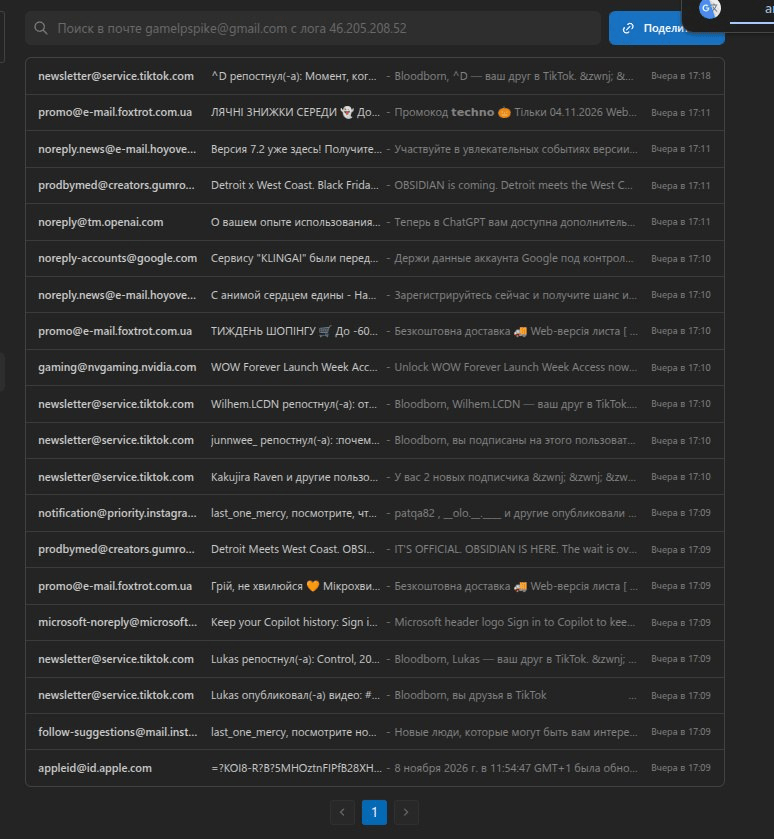
The tool belongs to Remus Stealer, an infostealer, meaning malware that steals data from infected computers. Remus supposedly gives its operators a searchable inbox right inside a stolen-device dashboard. Hudson Rock says it spoke with the developer and with a customer who used it, and the customer supplied screenshots of messages, timestamps and a control for sharing a mailbox with other operators.
If the claims are true, the risk goes beyond a single Gmail inbox. Attackers could read password reset links and verification codes, allowing them to access other accounts linked to that email address. This makes Gmail a valuable target because many online services use it to recover accounts.
“In the supplied version 1.3.9 announcement, Remus promotes email-code interception without collecting browser cookie files, claims that password changes and session revocation do not stop it, and advertises shareable mailbox links. The feature is listed as Enterprise-only; the main sales thread advertises that tier at $1,000 per month.” continues the report. “The sharing claim concerns giving other operators access to an already acquired mailbox through the service. The material does not show a victim being infected by opening one of those links.”
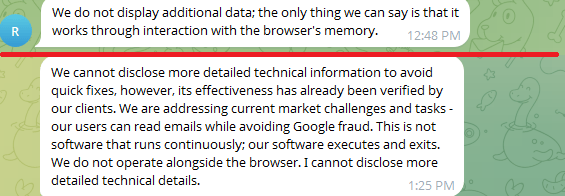
It is still unclear how the tool works. Hudson Rock says Remus does not steal browser cookies, while its developer claims that changing the Gmail password does not stop access. The developer has not shared technical details. He only said that the malware interacts with browser memory, but this does not explain how it can maintain access after a password change or when active sessions are revoked.
Hudson Rock believes Remus may obtain or create an authorization token while the victim is logged into Gmail through a browser. A remote component could then use this authorization to access emails even after the malware has stopped running, as long as Google continues to accept it. Tom’s Guide also reports that the tool can bypass Google’s anti-fraud checks and says it has contacted Google for comment.
However, other reports highlight some important uncertainties. CyberInsider says Hudson Rock has not confirmed that the tool can maintain access after a password change, nor has it established that the feature exploits a Gmail vulnerability. Hudson Rock has not conducted a controlled test to show that Remus can still access newly received emails after the victim changes their password and revokes existing sessions and third-party access. According to Cybernews, the developer describes the feature as a Gmail “zero-day”. However, this claim has not been independently reproduced.
The business side is more concrete. CyberInsider says the mailbox feature sits in an Enterprise tier at $1,000 per month, with shareable mailbox links so criminals can hand an inbox they’ve already compromised to others. The actor behind Remus Stealer offers the MaaS with three subscription tiers: Basic at $250, Pro at $500 and Enterprise at $1,000.
This kind of claim has a history. In late 2023, a developer called PRISMA surfaced an exploit that regenerated persistent Google cookies by manipulating a token and account ID pair, and Lumma then used it so access continued after a password reset. It’s a precedent and not proof, since Remus’ mechanism is unknown, and Hudson Rock still treats a Google password change as an essential recovery step, while saying victims should also look for other ways an attacker could keep access.
The tool is marketed to “enterprise” customers, so most users are unlikely to be targeted. It will probably be used mainly against organizations and high-profile individuals. Hudson Rock recommends that victims first disconnect and clean the infected computer before accessing their trusted accounts again. They should then change compromised passwords using a clean device and review their signed-in devices to remove suspicious sessions and third-party access.
Hudson Rock also advises users to check Gmail settings for unauthorized changes and secure any other accounts that use the compromised mailbox for password resets or verification codes. Other basic precautions remain important: watch out for phishing emails with urgent messages, spelling mistakes or suspicious sender addresses, and keep antivirus software up to date. Tom’s Guide expects Google to introduce additional Gmail protections if the tool proves as effective as its developer claims.
For now, this is a vendor’s marketing claim supported by customer screenshots and Hudson Rock’s investigation, not a confirmed Gmail vulnerability. One important detail offers some reassurance: attackers must first infect the victim’s computer and compromise their mailbox before they can use the tool.
“Remus is marketing an integrated mailbox-reading capability, and a customer has endorsed its claimed persistence. The most plausible broad model is reuse of access obtained or established during endpoint compromise.” concludes the report. “The evidence does not identify the mechanism or show fresh mail remaining accessible after comprehensive recovery.”
Follow me on Twitter: @securityaffairs and Facebook and Mastodon
(SecurityAffairs – hacking, Gmail)
Click Here For The Original Source.
——————————————————–