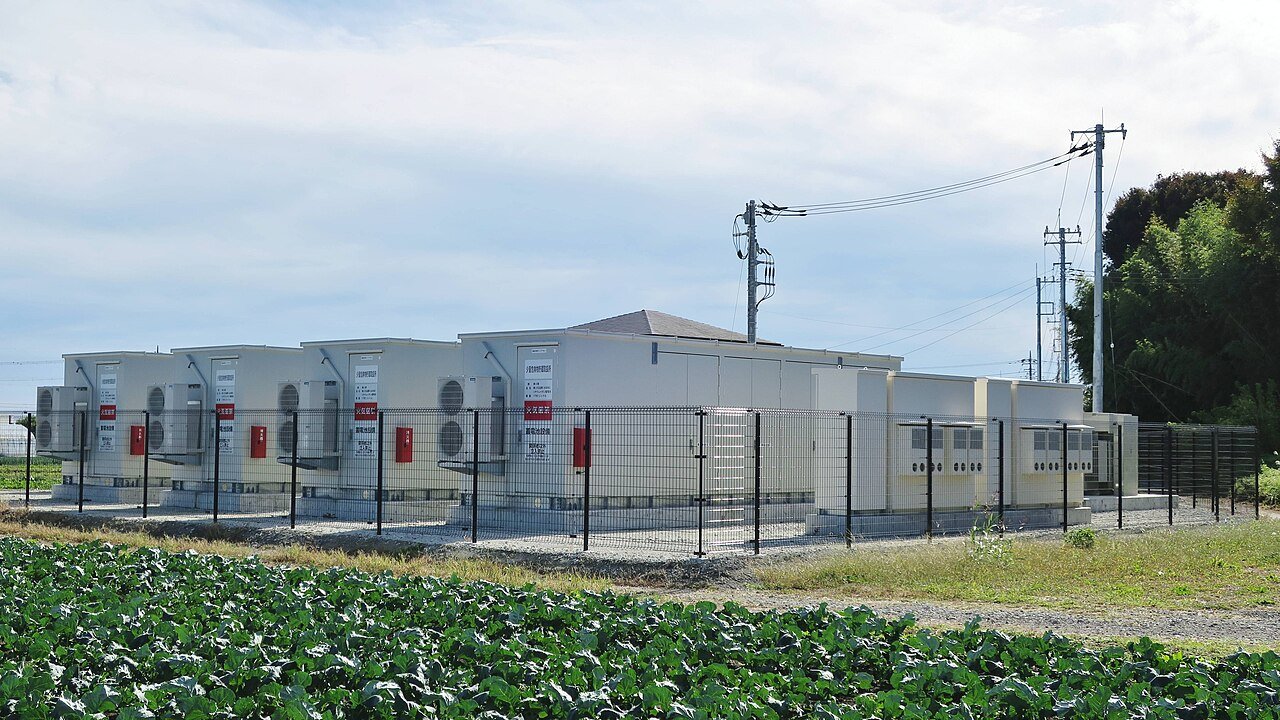
Panasonic has announced a full-scale cybersecurity monitoring trial for a grid-scale BESS facility in Japan.
The trial, which is performed by Panasonic’s holding company and its subsidiary, Panasonic Solution Technologies (PSTC), and in collaboration with ITOCHU, one of Japan’s largest general trading and investment companies, will take place under mostly simulated conditions. The companies note that technical and operational challenges prevent live validation efforts.
In addition, the press release notes that “[f]or security reasons, the location and detailed specifications of the demonstration facility have not been disclosed,” including the duration and scale of the test, or the number of battery systems and containers that will be tested.
The companies note that an unspecified “cybersecurity monitoring solution” will be deployed at the grid-scale BESS facility to evaluate its monitoring effectiveness. Specifically, the test will assess “whether continuous monitoring of communications and system behavior under conditions representative of actual grid operations enables early detection of anomalies and accurate situational awareness.”
In addition, the project will “identify implementation and operational challenges and key considerations associated with deployment in commercial settings,” as the joint effort attempts to understand the realities of grid-scale BESS deployments in the field.
The tech will use logic specifically designed for power-control communications used in grid-scale BESS, including protocols and command behaviors unique to energy management systems such as IEC 61850 or DNP3. Panasonic does offer its branded VERZEUSE solution for automotive cybersecurity, which may serve as some aspect of the backbone of the technology.
The companies claim that conventional security measures such as firewalls are “increasingly insufficient” to address threats like unauthorized access to internal networks or advanced attacks that impersonate legitimate devices, noting multilayered defense strategies, including “continuous monitoring of communications and control behavior[s]” are required to detect and alert operators or security analysts to anomalies, along with requiring a rapid response.
How the test will work
As noted, the companies believe that normal operation conditions would not generate sufficient detectable incidents within the limited demonstration period. Therefore, “proactive simulated cyberattack exercises” will be conducted and assessed.
The provided diagram shows the inclusion of an IoT-SIEM, which is a general acronym used for “Security Information and Event Management for the Internet of Things,” and while no details are provided, it will be “signature-based detection of known cyberattacks with threat detection specialized for power control communications.”
This effectively means signature-based detection for known threats, along with advanced anomaly detection (for “unknown” or zero-day threats), for a dual-layer approach.
Two stages of testing will apply: both on-site testing, for direct access to simulate connecting with local devices, such as plugging in a laptop to connect to the internal network of the facility, to attempt to override controls. Off-site testing will also occur, where “simulations will model unauthorized external access and advanced attack techniques originating from outside the facility”.
Panasonic notes it “aims to expand its role in safeguarding next-generation energy infrastructure amid accelerating digitalization and decentralization of power systems.”
However, it is not suggesting the results will be entirely private, but that they will “also be used to support compliance with industry guidelines and relevant standards, thereby contributing to the realization of safe, secure, and resilient social infrastructure.”