
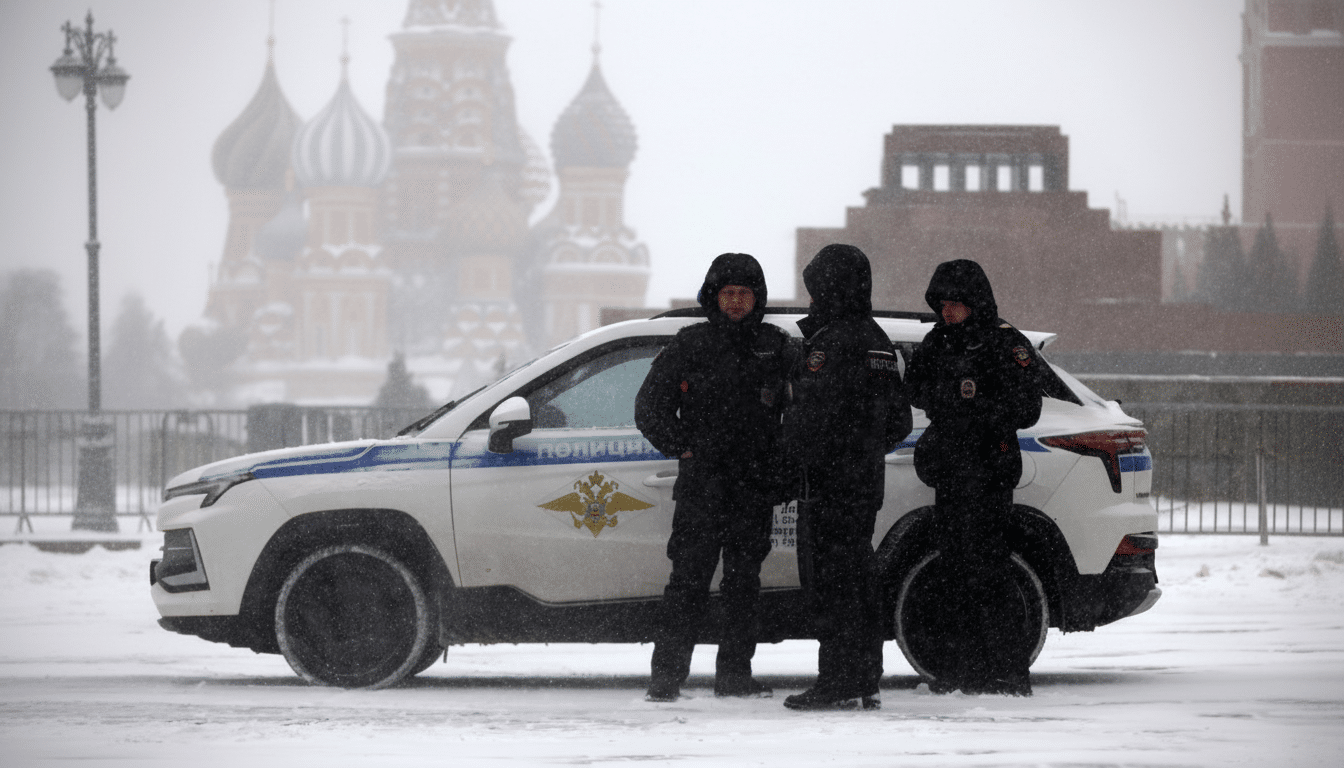
Russian authorities have detained the suspected administrator of LeakBase, a notorious cybercrime forum known for trading stolen data, according to state media reports. The individual, described as the forum’s creator and a resident of Taganrog in southern Russia, was taken into custody days after an international law enforcement operation knocked the site offline and seized its back-end databases.
U.S. and European officials recently announced the disruption of LeakBase, calling it one of the world’s largest hubs for cybercriminal activity. Investigators said they obtained a trove of internal records detailing forum operations, including a membership roll exceeding 142,000 accounts and roughly 215,000 messages.
A Major Cybercrime Hub Disrupted by Global Agencies
Launched in 2021, LeakBase functioned as a one-stop marketplace for hacked databases and illicit services. Its listings commonly featured stolen usernames and passwords, credit card numbers, bank account and routing details, and access to compromised corporate systems. Vendors used the forum to advertise tools for intrusion, credential stuffing, SIM swapping, and monetization of breached data.
Law enforcement has long argued that forums like LeakBase amplify the impact of breaches by accelerating the resale and reuse of stolen credentials. Investigators said the forum’s internal escrow records and messaging systems served as crucial infrastructure that helped criminals establish trust and move money with reduced risk.
A Global Push With Local Action Against LeakBase
The takedown of LeakBase was coordinated across 14 countries, according to the U.S. Department of Justice and Europol, with search warrants, arrests, and interviews in Australia, Belgium, Poland, Portugal, Romania, Spain, the United Kingdom, and the United States. Independent reporting said authorities made 13 arrests tied to the operation, underscoring the breadth of the effort.
Russia’s reported arrest is notable. While Moscow rarely extradites cyber suspects, it has at times moved against high-profile operators, particularly when international visibility is acute or domestic victims are affected. Past crackdowns on prominent groups illustrate that Russian law enforcement can act decisively when it chooses to, even as jurisdictional and diplomatic hurdles complicate cross-border cases.
What Seized Forum Data Can Expose to Investigators
Seizing a forum’s database yields far more than a roster of usernames. Investigators typically analyze private messages, transaction logs, escrow records, account recovery details, PGP keys, and patterns of operational security lapses. That mosaic can link handles to real identities, map supplier–buyer networks, and connect forum activity to specific breaches, botnets, or cash-out schemes.
In previous takedowns of major markets, such as earlier disruptions of credential-trading forums, these datasets enabled follow-on arrests and civil actions for months. Even where criminals used anonymizing tools, reused nicknames, recycled wallet addresses, and consistent writing styles have helped analysts correlate personas across platforms.
Resilience And The Rebuild Cycle After Forum Seizure
History suggests the LeakBase community will attempt to regroup. After earlier forum seizures, splinter communities quickly migrated to encrypted messaging channels, invitation-only boards, and dark web sites. Some rebrands burn fast; others rebuild trust slowly through vetted access and escrow guarantees. The churn imposes real friction—new vetting, lost reputation scores, and disrupted monetization—that can suppress activity for weeks or months.
Still, the market for stolen data remains adaptive. Disruptions tend to scatter core actors rather than eliminate demand. That’s why sustained pressure—seizures, arrests, and sanctions—has become the dominant strategy among international partners seeking to raise the cost of doing business in the underground economy.
Implications For Enterprises And Users After Takedown
For organizations, the LeakBase takedown is both a warning and an opportunity. If law enforcement obtained the forum’s back-end, victims may receive notifications through partnership channels. Security teams should prepare for targeted password resets, increased monitoring for credential-stuffing spikes, and rapid triage of accounts tied to known dumps.
Practical steps include enforcing phishing-resistant multifactor authentication, expanding use of passkeys where possible, monitoring for employee and customer credentials in third-party breach datasets via reputable providers, and tightening rate limits on login endpoints. For consumers, unique passwords and a password manager remain baseline defenses.
What Comes Next in LeakBase Investigation and Fallout
Authorities have not publicly named the suspect detained in Russia or detailed potential charges. The Justice Department has not commented on the reported arrest. As with other major cybercrime cases, the scope of evidence recovered from the forum will likely determine the pace and reach of subsequent enforcement.
Whether LeakBase reappears under a new banner or fades as its operators face legal pressure, the operation marks a significant moment in the continuing campaign against data-theft marketplaces. It shows that even large, distributed criminal platforms can be mapped, infiltrated, and dismantled when agencies align resources across borders.
Click Here For The Original Source.

