
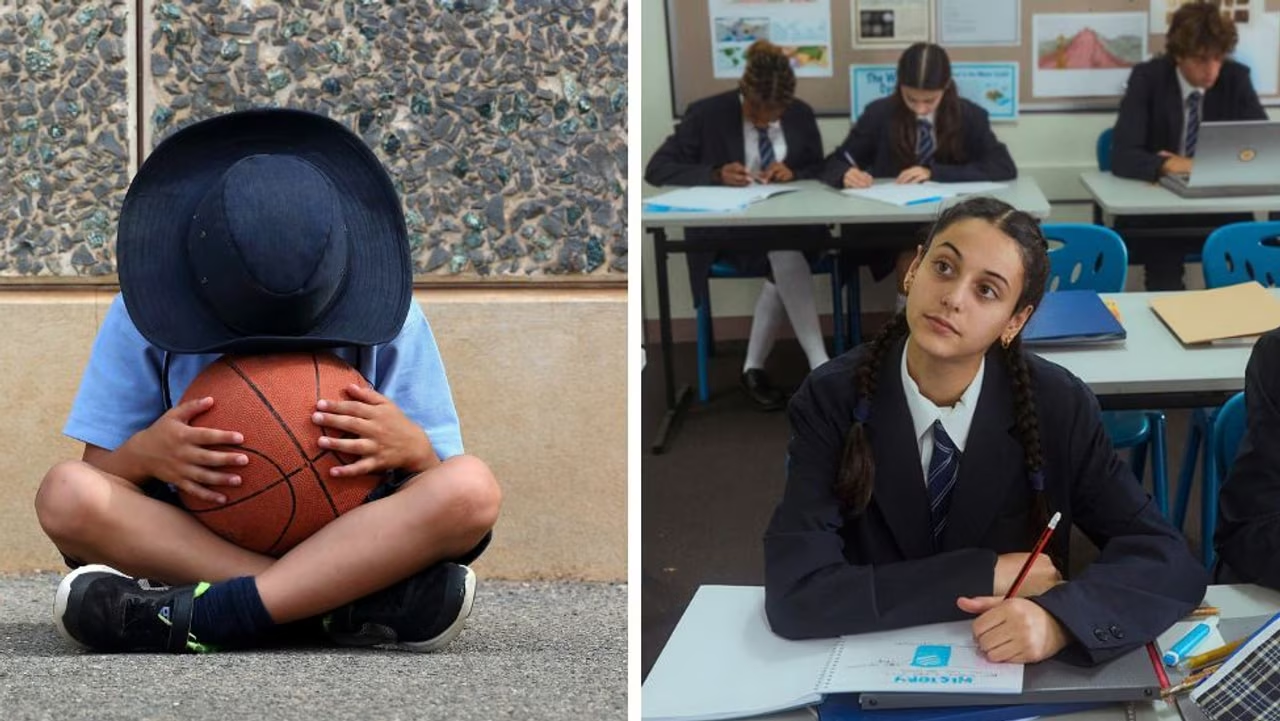
It seems like every week Australians are learning of the tragic death of a child or teen who took their own life after battling bullying or struggling with their mental health.
Their young faces flash across the TV, news websites and social media, leaving many people wondering what could have gone so wrong.
Often the isolating root cause lingers in the shadows.
While bullying has always been an issue in schools, it is no longer limited to physical shoving and name-calling in the playground or hallway, experts and current students have explained.
“It can be quieter and less visible, but the harm it causes is very real,” Dr Charlotte Keating, clinical psychologist and co-chair of the 2025 Anti-Bullying Rapid Review, told news.com.au.
According to the review, more than one in four students in Years 4 to 9 reported experiencing regular bullying, with reports of cyberbullying having surged by 455 per cent over five years.
These statistics sadly don’t shock Vedrana, a 16-year-old Sydney student who has been impacted herself.
The teen, who helped co-design the Federal Government’s new Let’s Stop Bullying resources, has also seen her friends and peers impacted, prompting her to speak out ahead of World Mental Health Day on October 10. This year’s theme is Lived Experiences Heard: Real Voices, Real Change.
“Bullying in the current environment is definitely different to what is advertised. When you watch TV, you see people pushed into lockers and asked for lunch money. Nowadays it’s under the covers – you can’t see it as much,” she told news.com.au.
It often involves a lot of name-calling and “jokes that aren’t really jokes”.
“Especially in online environments, there’s a lot of cyberbullying, name-calling and overall negative behaviours,” she said.
“It has changed how bullying occurs because things can be said not just during school hours.
“It sort of makes it harder to track what’s going on and open up about it. When it’s online, it can be even more complex because you might not see it happening, and there are so many more formats it can take,” the teen said, noting bullying in any form can make people feel isolated and like they have to “deal with everything on their own”.
With so many students facing regular bullying like this, school stops being a place to learn, Vedrana added.
“If bullying is just treated as the ‘normal’ background noise of growing up, it completely shifts your day-to-day reality,” she said.
“Whether you are being targeted in the classroom or online, it’s a constant threat causing isolation, and it completely drains your mental health.”
According to the review, emerging issues such as digitally altered intimate images, including deepfakes, are also having a growing impact on school learning environments, with female teachers and students at higher risk of being impacted.
Reports about digitally altered images to the eSafety Commissioner from people under the age of 18 more than doubled in the 18 months to June 2025, compared to the total number of reports received in the seven years prior.
“They can be shared rapidly and widely, and impact children and young people at home, which can make them harder to escape from and increase the potential negative impact they can have,” Dr Keating said, noting that 84 per cent of students bullied online are so targeted in person.
“This ongoing exposure can severely impact a young person’s wellbeing and can have lifelong impacts on their physical and mental health, and relationships.”
How can we end bullying?
Unfortunately, there’s no “one-size-fits-all” approach to tackling bullying, Dr Keating explained.
“What we heard is that it requires everyone working together and that the whole school community – students, parents and carers, and the school workforce – have a role in creating and maintaining kind, inclusive, safe and respectful learning environments,” she said.
Research shows “whole-of-school approaches can significantly reduce bullying” and other harmful behaviours, as well as support long-term change, Dr Keating added.
“Children and young people should feel heard, supported, and confident that concerns will be taken seriously, action will be taken to address harmful behaviour, and appropriate follow-up will occur to ensure they feel safe and supported.”
How can parents and carers help?
Parents and carers can be their child’s most powerful advocate, Dr Keating said.
“If you suspect your child has experienced, witnessed or engaged in bullying, try to talk to them and listen,” she said, urging anyone in need to look at the resources on the Lets Stop Bullying website.
The same goes for school staff who want to feel more equipped to effectively prevent and address bullying and other harmful behaviours.
The final report from the Anti-Bullying Rapid Review was released on October 18 last year. In February, Education Ministers agreed to build the recommendations into the National Framework for Addressing Bullying in Australian Schools.
All education sectors and schools are required to reflect the expectations of the National Framework in their policies and procedures by Term 1, 2027.
